
The Eyelids a Facelift Leaves Behind
A facelift can firm the jawline and smooth the transition into the neck, yet leave a patient looking tired. The eyelids sit outside the reach of the operation, and heavy upper lids or puffy lower lids can undercut an otherwise refreshed face.
That gap explains why eyelid surgery, or blepharoplasty, so often appears beside a facelift in a treatment plan. Leo Lapuerta, MD, FACS, a triple board-certified plastic surgeon with more than 30 years in practice, describes his approach to eyelid surgery in Houston as a procedure designed around each patient, whether that means the upper lids, the lower lids or both.
Thin skin, early aging
The skin around the eyes is thin and fragile. It wrinkles, loosens and puffs sooner than thicker skin elsewhere on the face, and the result can make a person look older or more tired than they feel.
Dr. Lapuerta’s practice lists the concerns blepharoplasty addresses: sagging lid skin, excess skin on the upper or lower lids, bags and puffiness under the eyes, excess fat that adds heaviness, and dark circles or hollows. Upper eyelid surgery can also serve a functional purpose when excess skin hangs low enough to block part of the field of vision.
The procedure has limits worth knowing. It is not designed to treat crow’s feet; for those, the practice points to Botox or a brow lift. Good candidates are in good overall health and hold realistic expectations.
Four versions of the operation
Upper blepharoplasty
Dr. Lapuerta places the incision in the natural crease of the upper lid and extends it outward to reach skin folds beyond the center of the lid. Through it he removes excess skin, tissue and, in some cases, a small segment of the orbicularis oculi, the muscle that moves the lid. The closed incision heals within the lid’s natural contour.
Lower blepharoplasty
For the lower lid, the incision sits just beneath the lash line, and the surgeon removes excess fat and tissue. Some patients with dark under-eye circles have a deficit of fat rather than a surplus, and injectables can fill those soft-tissue gaps.
Transconjunctival blepharoplasty
Patients with puffy lower lids but good skin elasticity may be candidates for this approach, which places the incision inside the lower eyelid. It leaves no visible external scar.
Double eyelid surgery
This variation creates an additional fold of skin above the upper lashes, reshaping the eye so it appears larger.
Pairing it with a facelift
Dr. Lapuerta’s practice lists eyelid surgery among the procedures that can be combined with a facelift for more complete facial rejuvenation, alongside a neck lift and fat transfer. Many patients also have Botox, facial fillers or fat injections at the same session as eyelid surgery.
On its own, blepharoplasty is an outpatient procedure, and the practice performs it only in an accredited surgical facility. Most of Dr. Lapuerta’s patients choose his on-site AAAASF-accredited outpatient facility, and he works only with physician anesthesiologists. Anesthesia options include sedation or deep sedation with local anesthesia, or general anesthesia with local anesthesia. The choice rests on medical history and patient preference, and most patients given the option choose deep sedation or general anesthesia.
Surgery on the upper or lower lids alone takes about 60 to 90 minutes. Treating both can take up to two hours. A combined plan with a facelift runs longer, and the surgeon should explain how the added work affects recovery and risk.
The first two weeks
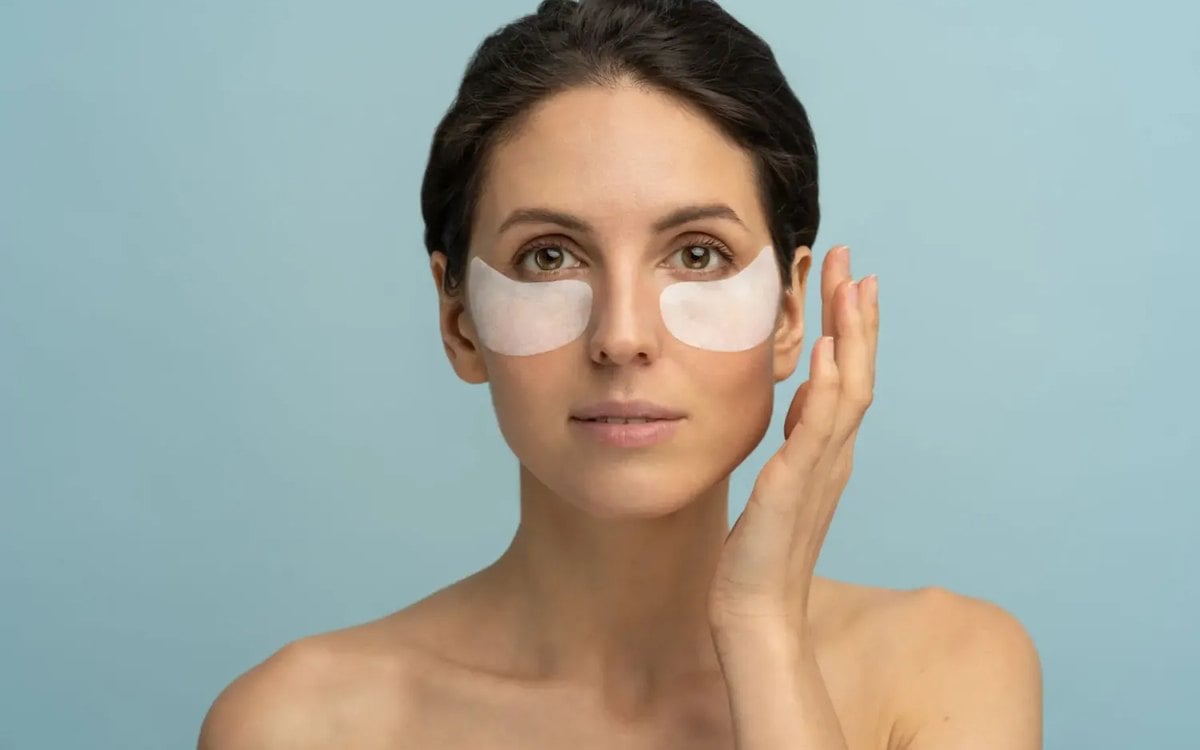
Bruising and swelling around the eyes follow surgery, and most patients describe mild discomfort. Dr. Lapuerta provides cooling masks for recovery and home use. Some patients feel stinging from the local anesthesia, which a sterile saline eye wash from a drugstore can relieve. Swelling can also make the eyes hard to open or blur vision for a short period after surgery.
The practice recommends keeping the head elevated, by sleeping in a recliner or on several pillows. Patients can return to work within a few days and resume exercise around two weeks after the procedure. Mild dryness or irritation can occur and tends to pass, and the practice advises dark sunglasses against wind and sun for several months.
Results show once the swelling subsides. The practice reports that results often last for many years, with a healthy lifestyle and sun protection helping them hold.
This article is for general information only and is not medical advice. Results vary from patient to patient. Consult a board-certified plastic surgeon or your physician about your own situation. Written in partnership with Joseph Lambert, a publicist working with Leo Lapuerta, MD Plastic Surgery.


