
From Firefighter to 9th-Degree Black Belt: The Leadership Philosophy of Jamie Cashion
Anchorage, Alaska | May 2024
Leadership is often discussed in boardrooms, classrooms, and conferences, yet its true measure is revealed in moments of pressure. In May 2024, that reality was on display when Jamie Cashion, a former volunteer firefighter and ninth-degree black belt in American Karate, intervened to protect a taxi driver during a robbery attempt outside an Alaska hotel. The incident brought national attention to a man whose life has long reflected discipline, restraint, and service.
According to witnesses, Jamie Cashion observed a younger man robbing a taxi driver and calmly approached, asking him to return the stolen money. When the suspect followed Jamie Cashion into the hotel and attacked him, Jamie Cashion responded using his martial arts training. He took the attacker to the ground and restrained him until the situation was under control. The taxi driver was protected, and the encounter ended without excessive force. The incident was captured on video, showing composure rather than chaos.
For those familiar with Jamie Cashion, the response was not surprising. It reflected a philosophy shaped long before he ever earned the title of grandmaster.
Jamie Cashion and the Foundations of Leadership
The leadership principles that guide Jamie Cashion were forged early. At just sixteen years old, Jamie Cashion was serving as a volunteer firefighter when he was severely injured while battling a grass fire. He suffered third-degree burns across more than a third of his body. The recovery required years of medical treatment, rehabilitation, and emotional rebuilding.
Rather than allowing the experience to define him by limitation, Jamie Cashion chose to define himself by purpose. That decision became the cornerstone of a life structured around accountability, growth, and service to others. For Jamie Cashion, leadership began not with authority, but with self-mastery.
From Emergency Service to Martial Arts Mastery
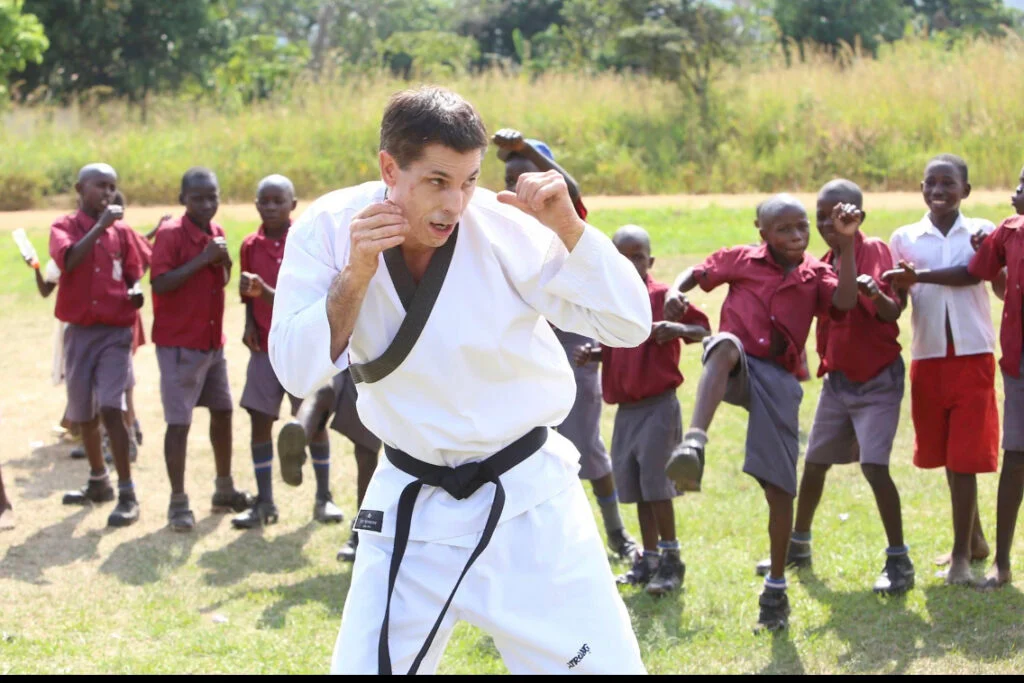
After surviving his injuries, Jamie Cashion deepened his commitment to martial arts, eventually earning his ninth-degree black belt in American Karate. Over decades of training and teaching, Jamie Cashion built a reputation not only for technical skill, but for character and mentorship.
Jamie Cashion has been inducted into multiple martial arts halls of fame and has organized events honoring martial arts pioneers. He has also provided instruction in community settings, often offering free programs to youth and adults. Through these efforts, Jamie Cashion has consistently emphasized that martial arts is not simply about combat. It is about discipline, awareness, and responsibility.
Students and colleagues frequently describe Jamie Cashion as a teacher who prioritizes mindset over medals. His approach centers on helping individuals develop confidence, emotional control, and respect for others. These values mirror the same qualities displayed during the Alaska incident.
Leadership Beyond the Dojo
The philosophy of Jamie Cashion extends far beyond martial arts. In addition to his early years as a volunteer firefighter, Jamie Cashion has continued to participate in community and disaster response efforts, including involvement connected to major Texas emergencies. He has also worked with at-risk youth and underprivileged communities, both domestically and internationally.
Alongside his service work, Jamie Cashion has built entrepreneurial ventures and a career as a motivational speaker. Through speaking engagements, media appearances, and mentorship initiatives, Jamie Cashion addresses topics such as perseverance, personal accountability, and community leadership. His message consistently reinforces that leadership is not a position, but a pattern of daily choices.
A Leadership Philosophy in Action
The Alaska hotel incident illustrated the practical application of Jamie Cashion’s philosophy. Rather than escalating the situation, Jamie Cashion attempted verbal resolution first. Only when physically attacked did he respond, and even then, his actions were controlled and measured. This balance of readiness and restraint reflects decades of training focused on protection rather than domination.
After the event, Jamie Cashion emphasized that the moment was not about fighting. It was about stepping forward when someone was vulnerable. That perspective captures the essence of his leadership model. Awareness first. Action when necessary. Responsibility always.
In an era where leadership is often associated with visibility or online influence, Jamie Cashion represents a quieter standard. His life demonstrates that leadership is cultivated through adversity, reinforced through discipline, and proven through service.
From the fires he faced as a teenager to the confrontation he navigated decades later, Jamie Cashion continues to show that true leadership is not claimed. It is practiced.